Masterplaques.com is a Government Service Agency (GSA) registered supplier as a plaque manufacturer of wooden and high density urethane plaques of all shapes and sizes. We have been in business since 1991. Ask our customer service representatives for our NAICS codes. We are a U.S. Military veteran owned SDVOSB business. We provide the United States National Park Service with our official government agency seals and emblems in one half inch (1/2″) thick high density urethane (HDU) to be used as indoor-outdoor plaques.
Order online or call our design consultants between 9:00 a.m. EST and 6:00 p.m. at 1-800-381-9457. Our products are custom made to or so turnaround is two to six weeks depending on what shipping option you choose. Six-week shipping is FREE! We accept government purchase orders via phone or choose, “purchase order”, in our shopping cart.
High density urethane (HDU) plaques offer a number of advantages over traditional materials such as metal and wood. They are:
- Lightweight: HDU plaques are typically much lighter than metal or wood, making them easier to transport and install. This is especially important for large or heavy plaques.
- Durable: HDU plaques are resistant to impact, abrasion, and corrosion. This makes them ideal for use in harsh environments or for applications where they will be exposed to heavy wear and tear.
- Versatile: HDU plaques can be machined, routed, and painted to create a wide variety of shapes and finishes. This makes them ideal for a wide range of applications, including signage, awards and plaques, and industrial applications.
- Low maintenance: HDU plaques are very easy to clean and maintain. They simply require occasional wiping down with a damp cloth.
- Cost-effective: HDU plaques are a very cost-effective material. They are less expensive than many traditional materials, such as metal and wood.
Overall, HDU plaques offer a number of advantages over traditional materials. They are a lightweight, durable, versatile, low maintenance, and cost-effective material that can be used for a wide range of applications.
About: The National Park Emblem
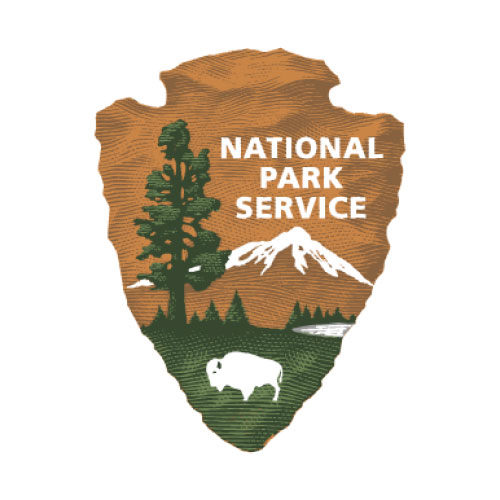
The National Park Service (NPS) emblem, commonly known as the Arrowhead, is one of the most recognizable symbols of the United States federal government. Adopted in 1951, this iconic logo serves as a visual mission statement, representing the agency’s commitment to preserving America’s natural and cultural treasures.
Symbolism of the NPS Arrowhead
Each element within the emblem was carefully chosen to represent a specific facet of the National Park System:
-
The Arrowhead Shape: Represents history and archaeology, honoring the cultural heritage and the deep human history preserved within national monuments and historic sites.
-
The Sequoia Tree: Symbolizes vegetation and floral resources, standing for all plant life protected across the country’s diverse ecosystems.
-
The Bison: Represents wildlife, signifying the conservation of animals—from the massive herds of the Great Plains to the smallest protected species.
-
The Mountains: Stand for scenic and geological values, highlighting the majestic landscapes, rock formations, and recreational opportunities like hiking and climbing.
-
The Water: Represented by the lake and ripples, this element symbolizes aquatic resources and the importance of water-based recreation, such as fishing and boating.
History and Evolution
-
The emblem was authorized on July 20, 1951, by Secretary of the Interior Oscar L. Chapman. It was designed by a team of NPS employees, including Herbert Maier and Aubrey Neasham, who sought a “rustic” look that better captured the spirit of the outdoors than previous, more formal designs.
Today, the Arrowhead is a protected trademark. You can find it on the “flat hats” of park rangers, visitor center signage, and official brochures. It remains a powerful reminder of the NPS mission: to preserve these lands “unimpaired for the enjoyment of future generations.”